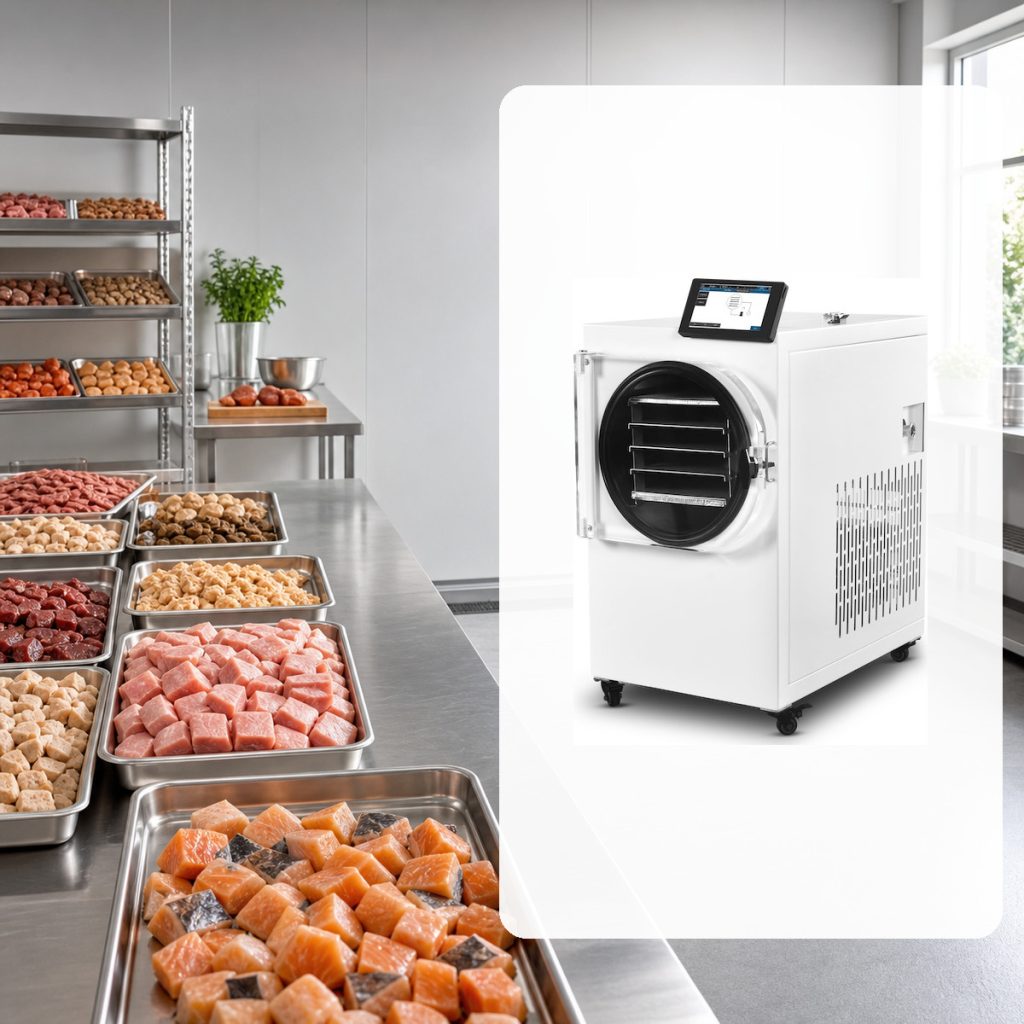
Food freeze drying removes moisture from frozen product under vacuum. A good result depends on the entire workflow: raw material, preparation, pre-freezing, tray loading, recipe settings, endpoint checks, and moisture-barrier packaging. The machine is important, but consistent preparation is what makes batches easier to compare.
A practical food freeze-drying workflow
- Define the target product. Decide the desired shape, texture, rehydration behaviour, serving size, and packaging format.
- Prepare a repeatable load. Record raw-material condition, cut size, cooked or uncooked state, starting weight, and tray depth.
- Pre-freeze consistently. Product temperature and frozen condition should be controlled before the drying cycle begins.
- Load trays evenly. Avoid mixing very different thicknesses or water contents in one comparison batch.
- Run and record the recipe. Note cycle settings, observations, total time, and any interruptions.
- Check the result. Evaluate dryness, internal texture, colour, aroma, breakage, and rehydration where relevant.
- Package promptly. Finished freeze-dried foods can absorb moisture from the air, so packaging and storage planning are part of the process.
Fruit and vegetables
Piece size, skin, sugar content, ripeness, and loading depth influence the result. Thin, even pieces are easier to compare during development. Record both fresh load and usable tray area so a recipe can later be transferred to a larger machine with a similar layer.
Meat, seafood, and pet treats
Food safety controls, cooking status, fat content, piece thickness, sanitation, and final water activity require careful planning. A product that feels dry on the surface may still need an internal endpoint check. Commercial sellers should define validated handling and packaging procedures appropriate to their market.
Candy, snacks, and prepared meals
Confectionery products can expand or change texture, while ready meals contain ingredients that dry at different rates. Use controlled trials before scaling. Keep a batch record that links product preparation to tray position and finished result.
Compare machines with the same product data
When requesting a recommendation, send product photos, recipe or ingredient type, water content if known, target kilograms per batch, cut size, tray depth, destination, voltage, and expected production frequency. This is more useful than asking for the largest machine within a budget.